

Learn how Hadrian helps security teams find, verify, and fix what attackers actually exploit.

Attaccare
Minacce validate. Risoluzione automatizzata.
La potenza di un pentest, la scalabilità dell'IA agentiva
L'approccio di validazione di Hadrian è fondamentalmente diverso dai pentest manuali periodici o dalla scansione limitata delle vulnerabilità. Eseguiamo la validazione attraverso test di penetrazione automatizzati e continui, guidati dal nostro Orchestratore IA agentivo specializzato.
Questo sistema agentivo è addestrato dal team interno di hacker di Hadrian per emulare le tecniche e i comportamenti di attori malintenzionati reali, fornendo test mirati e approfonditi che vanno oltre la tradizionale scansione batch. Le fasi di validazione e prioritizzazione vengono condotte simultaneamente durante lo 'scan attivo', garantendo certezza immediata. Questa IA agentiva non si basa su ipotesi: se un rischio appare sulla piattaforma, è stato verificato come reale.
Esplora le nostre funzionalità AEV

I test agentici sostituiscono i pentest
Un elemento chiave di differenziazione nel processo di validazione di Hadrian è la fornitura di prove concrete e utilizzabili per ogni finding. Ogni rischio verificato è accompagnato da un Proof of Concept (PoC).
- Il PoC descrive le istruzioni personalizzate e passo dopo passo che la piattaforma ha seguito per validare il rischio, fornendo prove verificabili che consentono ai clienti di riprodurre e confermare autonomamente l'exploit.
- Questo livello di trasparenza e prova garantisce che il finding non sia un falso positivo.
- L'IA esegue scansioni contestualmente rilevanti, il che significa che testa solo le vulnerabilità specifiche corrispondenti alle tecnologie presenti sulla superficie di attacco (ad esempio, le scansioni WordPress non vengono eseguite su sistemi SAP), minimizzando le interruzioni operative.
Chiudere il cerchio grazie al contesto
Una volta verificata un'esposizione, la fase Attaccare passa alla Mobilizzazione. Hadrian è progettato per eliminare le frizioni che bloccano i workflow di remediation, grazie a un contesto chiaro e strumenti integrati.
Guida comprensibile: forniamo ai team di remediation spiegazioni facilmente leggibili delle minacce e istruzioni di remediation passo dopo passo, redatte dai nostri hacker etici.
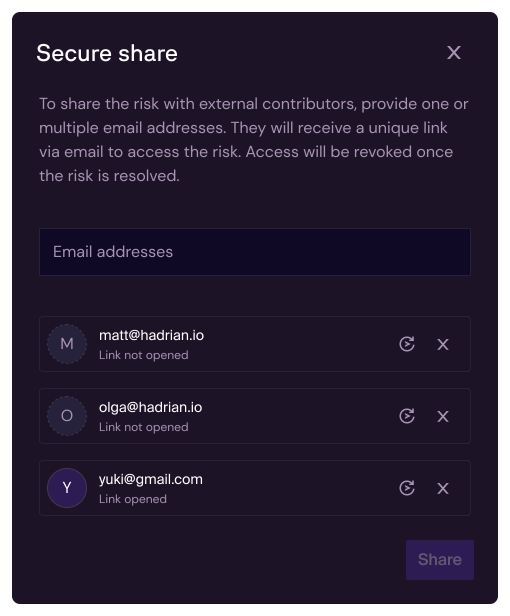
Collaborazione: funzionalità come Secure Share consentono agli utenti di condividere istantaneamente un link univoco a un rischio specifico con team non di sicurezza o terze parti, senza concedere accesso completo alla piattaforma tramite controlli di accesso basati sui ruoli. La possibilità di assegnare un 'responsabile del rischio' chiarisce le responsabilità, elimina le ambiguità e accelera il processo di remediation.
Monitoraggio: la funzionalità Risk Timeline traccia il ciclo di vita e l'attività di gestione relativa a una vulnerabilità di sicurezza, indicando quando è stata scoperta, condivisa, assegnata e risolta.
Fai il primo passo nei panni del tuo avversario
Hadrian ti offre la prospettiva dell'hacker sulla tua attività esposta su internet per rafforzare la tua postura di cybersicurezza. Curioso di sapere cosa vedono?
Leader del settore
Hadrian è stato riconosciuto come leader nel GigaOm Radar Report for Attack Surface Management per il secondo anno consecutivo e ha ricevuto il New Product Innovation Award di Frost & Sullivan per la gestione delle superfici di attacco esterne.

Come esegue l'IA agentiva la verifica delle esposizioni?
L'IA agentiva di Hadrian valida le esposizioni tramite un "Orchestratore IA" che replica autonomamente il comportamento degli hacker etici umani, andando oltre gli script statici verso un'exploitation attiva e context-aware. Piuttosto che testare gli asset indiscriminatamente, gli agenti analizzano lo stack tecnologico e la configurazione specifici per decidere quali "meccanismi agentivi di rilevamento dei rischi" distribuire, eseguendo in sicurezza catene di attacco complesse e multidimensionali per confermare la sfruttabilità reale. Questo processo continuo ed event-driven si attiva immediatamente al rilevamento di cambiamenti nell'infrastruttura e produce prove dettagliate sotto forma di Proof of Concept (PoC), garantendo che i team di sicurezza ricevano prove inconfutabili e riproducibili di rischi verificati piuttosto che alert teorici.
Come filtra Hadrian i falsi positivi?
Hadrian minimizza i falsi positivi distinguendo tra "Rischi Potenziali" e "Rischi Verificati." Per i rischi verificati, l'Orchestratore IA simula in sicurezza un attacco per dimostrare che la vulnerabilità è sfruttabile, fornendo un proof-of-concept per il finding. Questo riduce decine di migliaia di alert potenziali ai pochi che contano davvero.
Hadrian sostituisce il pentesting?
Hadrian può sostituire completamente o parzialmente i test di penetrazione tradizionali, a seconda delle esigenze dell'organizzazione. È progettato per agire come un'alternativa automatizzata e continua al modello di test manuale periodico.
Cosa fa la validazione adversariale delle esposizioni per i team di sicurezza?
La validazione adversariale delle esposizioni trasforma la gestione delle vulnerabilità utilizzando agenti IA context-aware per imitare attivamente attaccanti reali, eseguendo in sicurezza catene di exploit complesse e multidimensionali per testare le difese di un'organizzazione. Piuttosto che affidarsi ad alert teorici, questo processo valida i rischi autonomamente tentando un'exploitation reale, filtrando migliaia di falsi positivi e fornendo prove inconfutabili di Proof of Concept (PoC) per le poche minacce reali che contano. Simulando continuamente questi attacchi e ri-testando automaticamente le remediation, il sistema garantisce che i team di sicurezza si concentrino esclusivamente sulle vulnerabilità confermate e sfruttabili, senza interrompere gli ambienti di produzione.