With 1 in 4 manufacturers forced to shut down operations following a cyber attack in the past year, and 72% of attacks originating from IT systems, security teams are facing a challenge. For SOC practitioners and team leaders in manufacturing, it is important to be ready when it happens.
The problem runs deeper than just the volume of attacks. Manufacturing environments present unique complexities that traditional vulnerability management simply can't address. If you're a SOC analyst or security team leader in this space, you've likely experienced the frustration firsthand: drowning in alerts, struggling to prioritize what matters, and fighting an uphill battle to protect an ever-expanding attack surface.
But there's a better way forward. Continuous Threat Exposure Management (CTEM) is emerging as a game-changing approach for manufacturing security teams—and organizations like Damen Shipyards Group are already seeing the results.
Manufacturing security is weighed down
Manufacturing companies face a perfect storm of cybersecurity challenges that make them uniquely vulnerable. Understanding these challenges is the first step toward solving them.
Legacy system hangovers
Your organization probably operates a mix of cutting-edge Industry 4.0 technologies alongside legacy industrial control systems that predate modern cybersecurity standards. These older systems can't be easily replaced—the costs are prohibitive, and the operational disruption would be massive. Yet they represent critical vulnerabilities that attackers actively exploit.
Meanwhile, digital transformation initiatives are introducing new complexities: industrial IoT devices, cloud-edge computing, and machine learning algorithms that promise efficiency gains but also create new attack vectors. Every connected sensor, every automated process, every third-party integration expands your attack surface.
IT-OT disconnect
If you're working in manufacturing security, you've probably encountered this challenge: IT and OT teams operate with fundamentally different priorities. IT focuses on data confidentiality and availability. OT prioritizes uptime and safety above all else. When a vulnerability needs patching, IT wants it done immediately; OT can't risk production disruption.
This disconnect leads to fragmented cybersecurity strategies, unclear responsibilities, and critical gaps in defense. Without a unified approach, your organization remains vulnerable even when both teams are doing their jobs well.
Alert fatigue
Before adopting more sophisticated approaches, many manufacturers rely on traditional vulnerability scanning tools that generate overwhelming volumes of alerts—often 500 to 700 potential issues at a time. Your team faces an impossible task: which vulnerabilities actually matter? Which are genuinely exploitable in your specific environment? Which should you address first?
Without clear prioritization, teams either waste resources chasing false positives or miss critical threats hidden in the noise. It's a lose-lose situation that leaves security professionals burned out and organizations exposed.
Why traditional approaches don’t meet the moment
Traditional vulnerability management operates on a simple premise: scan periodically, identify issues, create tickets, and patch. This worked reasonably well in simpler IT environments, but it breaks down in modern manufacturing contexts.
The fundamental problem is that traditional approaches lack business context. A critical-severity CVE might sound alarming, but if it affects an isolated development system, it poses minimal real-world risk. Conversely, a medium-severity misconfiguration on your customer-facing payment system could be catastrophic. Yet traditional tools treat these scenarios equivalently.
Traditional methods also can't keep pace with the speed of modern threats. Attackers don't wait for your quarterly vulnerability scan. They exploit weaknesses the moment they're discovered. By the time you've completed your assessment, prioritized findings, scheduled remediation, and deployed patches, the threat landscape has already shifted.
For manufacturing environments with their complex mix of IT, OT, legacy systems, and modern technologies, this lag can mean the difference between operational continuity and a production-halting breach.
CTEM is a smarter approach to manufacturing security
Continuous Threat Exposure Management represents a fundamental shift from periodic assessments to always-on, risk-based security management. For manufacturing security teams, CTEM offers exactly what traditional approaches lack: continuous visibility, intelligent prioritization, and business-aligned risk management.
How CTEM works
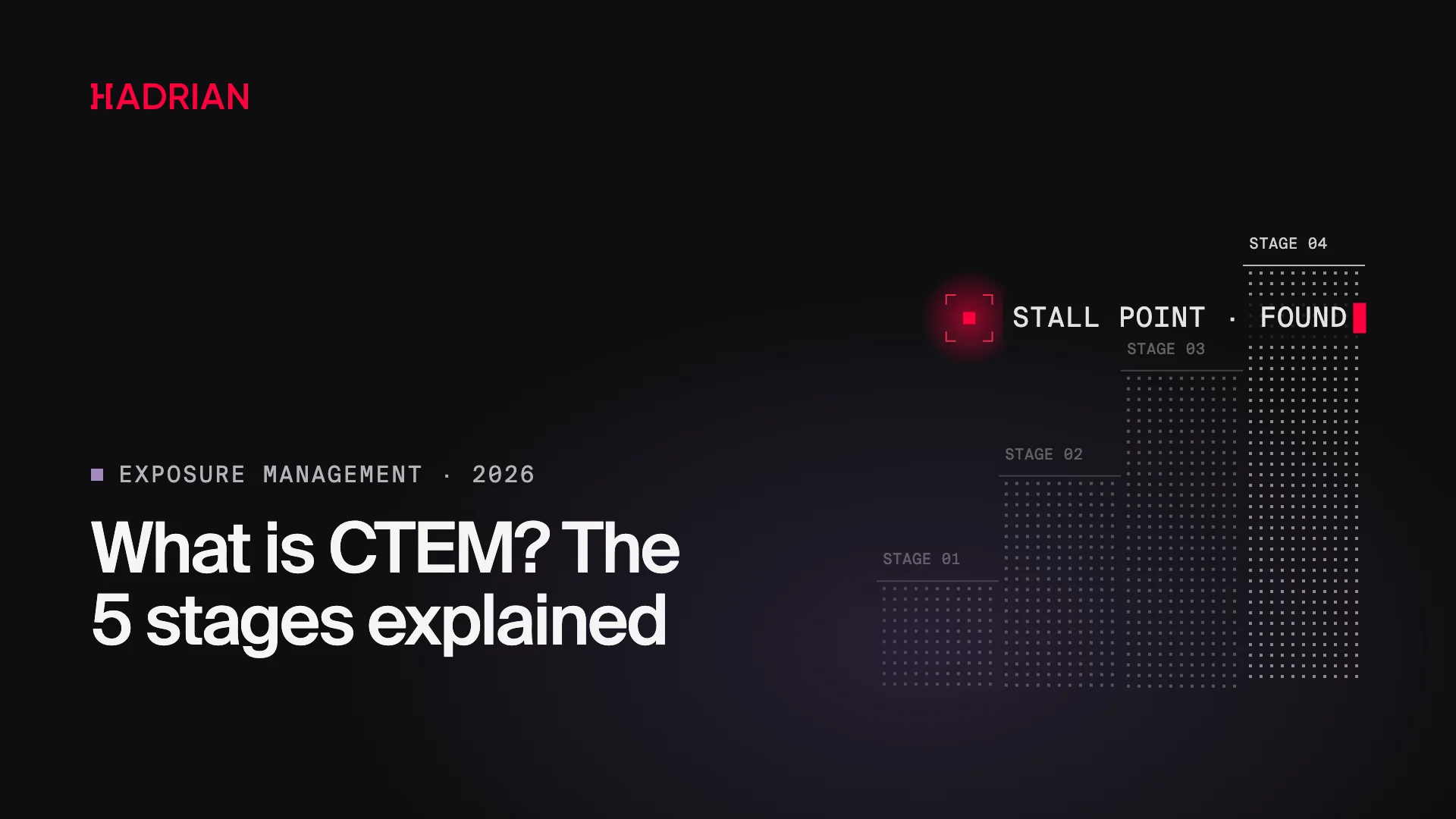
CTEM operates as a continuous five-stage cycle:
- Scoping defines what matters most to your organization—which assets are mission-critical, which contain sensitive data, which would cause the greatest operational or reputational damage if compromised.
- Discovery continuously identifies and catalogs exposures across your entire environment, including not just known vulnerabilities but also misconfigurations, excessive permissions, and process weaknesses.
- Prioritization evaluates exposures based on three critical factors: exploitability (is this actually being exploited in the wild?), urgency (are threat actors currently targeting organizations like yours?), and business impact (what would happen if this were exploited?).
- Validation confirms whether discovered vulnerabilities are genuinely exploitable in your specific environment through testing and simulation.
- Mobilization coordinates rapid remediation with clear workflows, pre-approved playbooks, and cross-team collaboration.
The cycle then repeats continuously, adapting as your business evolves and the threat landscape shifts.
Why CTEM transforms manufacturing security
For manufacturing environments specifically, CTEM addresses the sector's unique challenges head-on. It handles the complexity of legacy systems by focusing on actual exploitability rather than theoretical vulnerabilities. And it cuts through alert fatigue by delivering validated, prioritized intelligence that your team can actually act on.
According to Gartner research, organizations that prioritize security investments based on a CTEM program are three times less likely to suffer a breach. For manufacturing companies where a single breach can cost $4.73 million and force operational shutdowns, it is very important.
Damen's CTEM journey
Theory is valuable, but nothing beats seeing CTEM in action. Damen Shipyards Group offers a compelling case study of how CTEM principles can transform manufacturing security operations.
The challenge
Before implementing a CTEM approach through their partnership with Hadrian, Damen's security team faced the same challenges plaguing many manufacturers. They were inundated with information from various cybersecurity products—often receiving 500 to 700 alerts without clear prioritization. Distinguishing genuine threats from false alarms was nearly impossible, and the team struggled to know where to focus their limited resources.
As Gijs Kerstens, Technical Lead Security at Damen, and Hans Quivooij, their CISO, explained, the lack of tangible risk validation made it difficult to build an effective remediation strategy. They needed more than just another tool generating alerts—they needed validated intelligence that could drive action.
The CTEM solution
Working with Hadrian, a cybersecurity platform focused on external-facing asset risk reduction, Damen implemented a CTEM-aligned approach with several key differentiators:
Validated risk assessments: Rather than simply flagging potential issues, Hadrian actively tests vulnerabilities to confirm they're genuine threats in Damen's specific environment. This validation eliminates false positives and gives the security team confidence they're addressing real risks.
Clear prioritization: Every alert comes with business context, enabling Damen's technical teams to focus on the most critical risks first. No more guessing which of the 700 alerts actually matters—the system tells them.
Secure collaboration: Hadrian's secure sharing functionality allows Damen to delegate issues to the right internal contacts for remediation, then verify fixes through follow-up rescans. This streamlines the mobilization phase and ensures remediation efforts are effective.
The results
The impact has been significant. Damen achieved a substantial reduction in alert volume, with remaining alerts clearly indicating risk priority. This clarity enables better planning and resource allocation across their security operations.
Perhaps more importantly, the team's experience changed dramatically. Rather than battling overwhelming, unprioritized data, they work with actionable intelligence from security experts who understand their challenges. The partnership delivers on its promises, enhancing Damen's overall cybersecurity posture while making security operations more manageable and effective.
Is CTEM right for your manufacturing organization?
If you're a Security Operations practitioner or team leader in manufacturing facing alert fatigue, struggling to prioritize vulnerabilities, or worried about sophisticated threats slipping through periodic assessments, CTEM deserves serious consideration.
The approach scales to your organization's complexity. It reduces operational burden on your team while simultaneously improving security outcomes—a rare combination in cybersecurity.
The key is finding the right approach and partners for your specific context. Damen's success with Hadrian demonstrates that CTEM is practical, proven, and delivering results for manufacturing organizations today.
Your attackers aren't waiting for your next quarterly scan. Your security approach shouldn't either. Continuous Threat Exposure Management offers a path from being overwhelmed by threats to being in control of your security posture. And for manufacturing organizations facing today's threats, that transformation is essential.
{{cta-demo}}