We are proud to announce that Hadrian has been recognized in the Gartner® Emerging Tech Impact Radar™: Preemptive Cybersecurity, 2025. In the report, Hadrian is listed as a Sample Vendor in the Autonomous Adversarial Emulation category. We believe this recognition serves as a powerful validation of our approach to offensive security and makes plain the critical shift the industry is making toward continuous, automated validation.
The shift to preemptive cybersecurity
The Gartner® Emerging Tech Impact Radar™ gives examples of technologies and trends that are shaping the future of products and services. It plots how each of these technology categories is expected to develop in the near and long-term. The Preemptive Cybersecurity report focuses on the challenging reality facing modern CISOs. The traditional model of periodic scanning and annual penetration testing leaves massive visibility gaps. By the time a vulnerability is identified in a quarterly report, it may have already been exploited.
Preemptive cybersecurity moves the defensive line forward. It focuses on the ability to identify exposures and weaknesses before a malicious actor can leverage them. This requires a transition from static asset inventories to dynamic attack surface management, and from theoretical risk scoring to validated proof of exploitability.
Defining Autonomous Adversarial Emulation
A key component of this preemptive shift is what Gartner categorizes as Autonomous Adversarial Emulation. At Hadrian, we refer to this capability as Adversarial Exposure Validation (AEV). Gartner sees that this emerging tech category will reach its peak in 3 to 6 years from now. According to Gartner, that means “Fast Followers” should be investigating how trends like autonomous adversarial emulation can fit into their cybersecurity strategy.
Autonomous Adversarial Emulation is a more sophisticated form of security testing. It moves beyond the limitations of human-constrained penetration testing and the false positives of vulnerability scanners. Instead, it utilizes AI and automation to mimic the behaviors, tactics, techniques, and procedures (TTPs) of sophisticated threat actors at scale.
Why Hadrian?
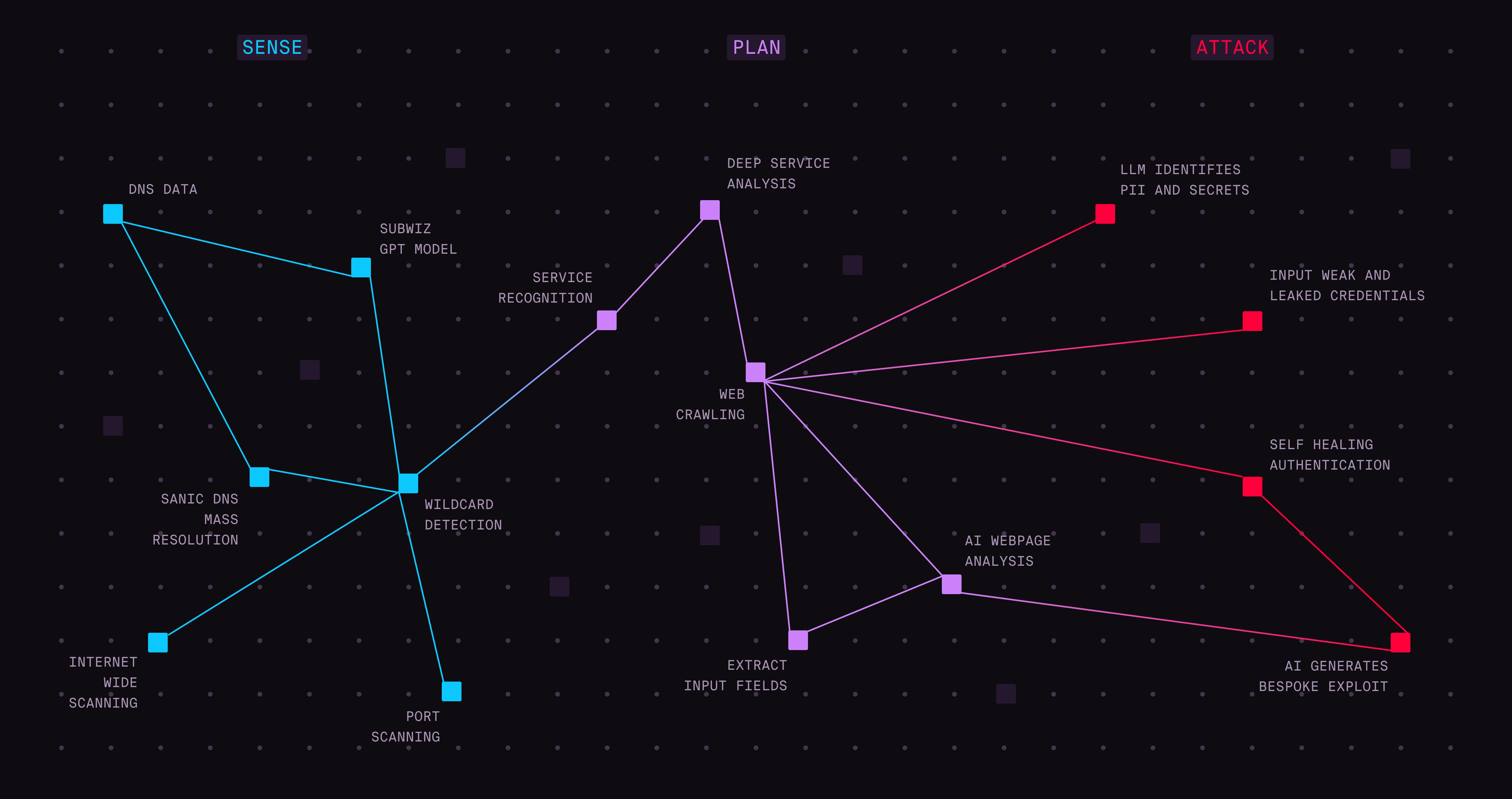
We believe Hadrian’s inclusion as a Sample Vendor in this category highlights our unique architecture. Our platform is built on an agentic AI model that executes a continuous Sense, Plan, Attack cycle. Unlike legacy tools that simply replay recorded attacks, Hadrian’s agents adapt to the target environment, finding unique paths to compromise just as a human hacker would.
Our platform does not just identify that a door is unlocked; it verifies what lies behind it, prioritizing remediation based on business impact rather than technical severity alone. This capability allows security teams to drastically reduce Mean Time to Remediate (MTTR) and eliminate the operational friction caused by false positives.
Looking ahead to 2026
The inclusion of Autonomous Adversarial Emulation in the 2025 Impact Radar suggests that this technology is moving from the bleeding edge to the mainstream necessity. As we look toward 2026, we anticipate that the ability to autonomously validate security posture will become a standard requirement for mature security programs.
We are honored to be recognized by Gartner in this report. For Hadrian, this is more than just a listing; it is a signal that the market is ready for a proactive, validated, and autonomous approach to security.
_____
Gartner® Emerging Tech Impact Radar™: Preemptive Cybersecurity, 2025.
GARTNER is a trademark of Gartner, Inc. and its affiliates.
Gartner does not endorse any vendor, product or service depicted in its research publications, and does not advise technology users to select only those vendors with the highest ratings or other designation. Gartner research publications consist of the opinions of Gartner’s business and technology insights organization and should not be construed as statements of fact. Gartner disclaims all warranties, expressed or implied, with respect to this research, including any warranties of merchantability or fitness for a particular purpose.