Guides
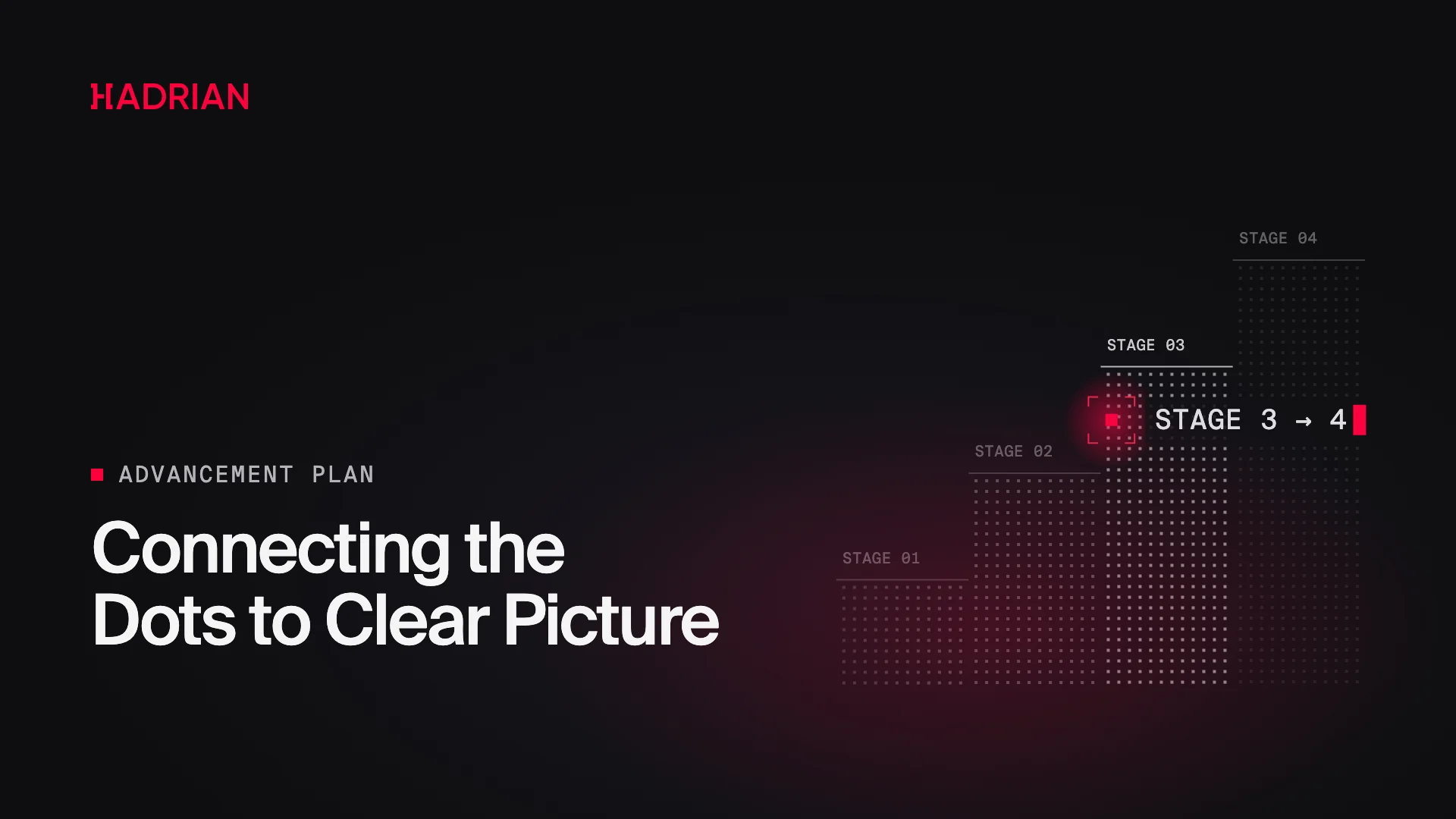
Advancement plan: Connecting the Dots to Clear Picture
At Stage 3 of the External Exposure Maturity Model, findings are validated continuously and mapped to attack paths. The constraint is orchestration: connecting those dots at speed and at scale still requires meaningful human effort per scenario. The advance to Stage 4 replaces that orchestration with automation, adversarial emulation that adapts to environment changes without a human decision at each step, and leadership visibility derived from live programme data rather than periodic compilation. This plan covers the technical, organisational, and governance changes required to get there.
What you will find in this advancement plan:
- Six structural shifts to execute. From replacing manual scenario orchestration with automated emulation to pre-authorising rapid response protocols for machine-speed operation.
- The governance decision that precedes everything else. What pre-authorised response looks like, what requires escalation, and why this must be resolved before any technical investment.
- Four mistakes that pull programmes back to Stage 3. Including why deploying autonomous emulation without matching remediation infrastructure creates a new kind of queue problem.
- The outcomes that define Clear Picture. Coverage exceeds 95%. Critical exposures close within 48 hours. New exploit disclosures confirmed in hours, not days.
Speakers.
No items found.