Live webinar: the ARTEX attack chain, step by step

Monday, November 30, 3 p.m. CET. Rogier Fischer and Klaas Meinke show how AI attacker agents run an attack, and what to fix first. 45 minutes, live.

Save your seat
No items found.

ARTEX · AI attacker agents

Attackers are using ARTEX. See what it would find on you.

ARTEX lets AI agents run an attack with very little human input, and it has been used in real intrusions since August. Hadrian’s agents map what you expose, test it the way ARTEX does, and prove which exposures are real.
Sources: FBI FLASH-20261113-001, 13 November 2026; NorForge and Reuters, 19 October 2026; ThreatDefence advisory, 16 November 2026.

Book a demo
<3
h
to privileged access in some ARTEX intrusions
~$50
model cost per breach in one agent campaign
1,600
+
ARTEX consoles reachable from the internet
12,000
+
forks of the original code

The ARTEX chain

Every step it takes has a known fix.

At a few dollars per attempt, attackers no longer pick targets. Everything reachable gets tried, and the agent does not need a known CVE.

Reads your apps
01

Pulls JavaScript bundles, source maps and API specs to learn your internal routes.

Fix: Take source maps, API specs and config files off production.

Signs in
02

Forges unsigned tokens and sprays passwords at one attempt per second.

Fix: Reject unsigned tokens, rate-limit per account, use phishing-resistant MFA.

Uses leaked secrets
03

Searches code repositories for keys and turns them into cloud access within minutes.

Fix: Scan repos and pipelines, rotate what you find, drop long-lived keys.

Reaches consoles
04

Logs in to admin, deployment and backup tools left open to the internet.

Fix: Keep consoles off the internet and restrict outbound traffic.

Finds new flaws
05

Tests your own code for access and injection flaws nobody has reported.

Fix: Test your internet-facing apps the way an attacker would, continuously.

Moves sideways
06

Uses the access it gained to map your directory, move between hosts and send data out.

Fix: Apply least privilege, segment networks and alert on unexpected shells.

How Hadrian helps

Find the way in before an agent does.

Hadrian uses the same agentic AI as the attacker, inside strict scope and safety limits, with a human reviewing every finding. It works alongside your scanner, EASM tool or pentest provider.

Atlas · See what the agent sees

Starts from your organization and finds every internet-facing asset, including the ones no inventory lists. Then tests all of it, every day.

Explore Atlas

Nova · Test the apps that matter

Agentic pentests on the applications you choose. Nova signs in as every role, learns the business logic and chains small steps into real impact.

Explore Nova

Proof · Act on what is real

Every exposure is exploited before you are alerted, with the request, response and steps to reproduce. In Hadrian research, 0.47% of raw findings proved exploitable.

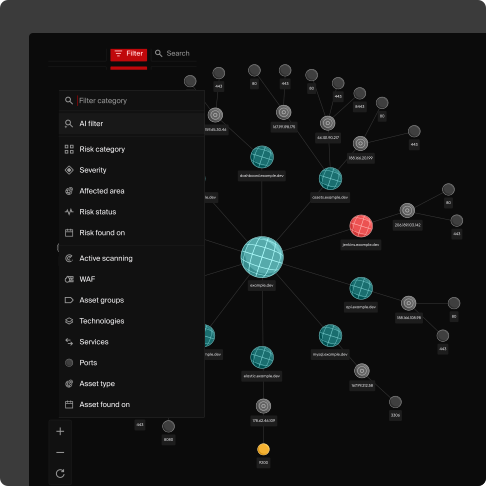
Atlas asset graph: a root domain linked to its subdomains, IP addresses and ports, with the filter menu open
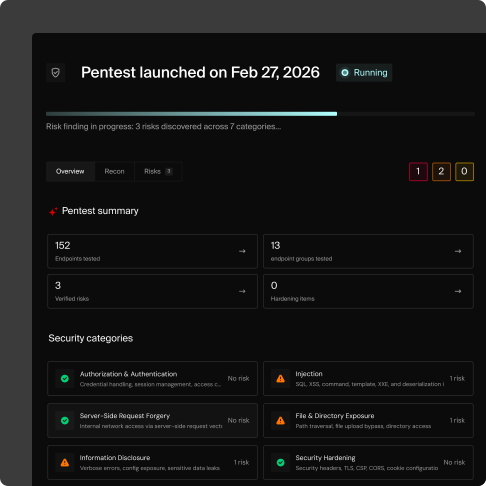
Nova pentest in progress, with findings grouped by security category
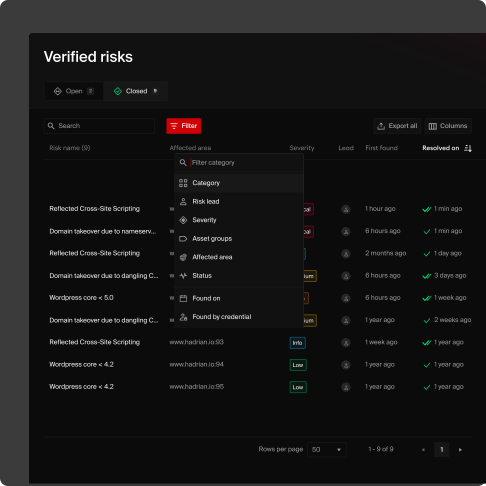
Verified risks: each exposure proven exploitable, with severity and status

ARTEX exposure review

See your attack surface the way ARTEX does.

A 30-minute session with a Hadrian security expert. Give us your domain and we walk you through what an attacker agent would reach first.

The internet-facing assets an agent would find from your organization, including unlisted ones

Where the ARTEX chain could start: exposed app files, sign-in pages and consoles

What to fix first, in the order the agent works

Nothing to install. No access to your infrastructure needed.

Questions

What is ARTEX?

An open-source framework, published on GitHub on 26 July 2026, that lets AI agents run an attack with very little human input. The model is a swappable part, so blocking one AI provider does not stop it. The original repository is offline, but its forks are still in use.

Read our full ARTEX breakdown

How do I know if ARTEX has been used against us?

Look in your logs for its behavior: a request for a page that cannot exist followed by path guessing, source map fetches followed by internal API calls, unsigned tokens, and sign-ins exactly one second apart. The FBI alert FLASH-20261113-001 lists indicators. Hadrian works from the outside in and does not detect intrusions; it shows what an agent can reach and exploit today.

Do I need to install anything?

No. Hadrian starts from your organization and domains and tests what is reachable from the internet. There is nothing to install and no access to your infrastructure needed.

Does Hadrian replace my scanner or pentest provider?

No. Hadrian works alongside them. It adds continuous, attacker-style testing of everything you expose and only reports exposures it has proven.